Jesu, juva
We’ve been unknowingly speaking of gods we don’t believe in (And I bet most of you had no idea).
Every time you and I speak or write the date, we are unknowingly following old pagan rituals originally intended to invoke a Roman god. Go figure, right!
Not metaphorically. Literally. The months of the year were named by pagans, for pagan purposes, honoring pagan deities. And even today, we are using them without a second thought.
Let me clarify the intent of this writing up front. I am not pushing what may be an assumed narrative. This is not a call to panic. You’re not sinning by writing “January” on a check. But a man who doesn’t know what he’s standing on is a man who can be moved without knowing it. So let’s look at this. I invite you to fact check the below.
January
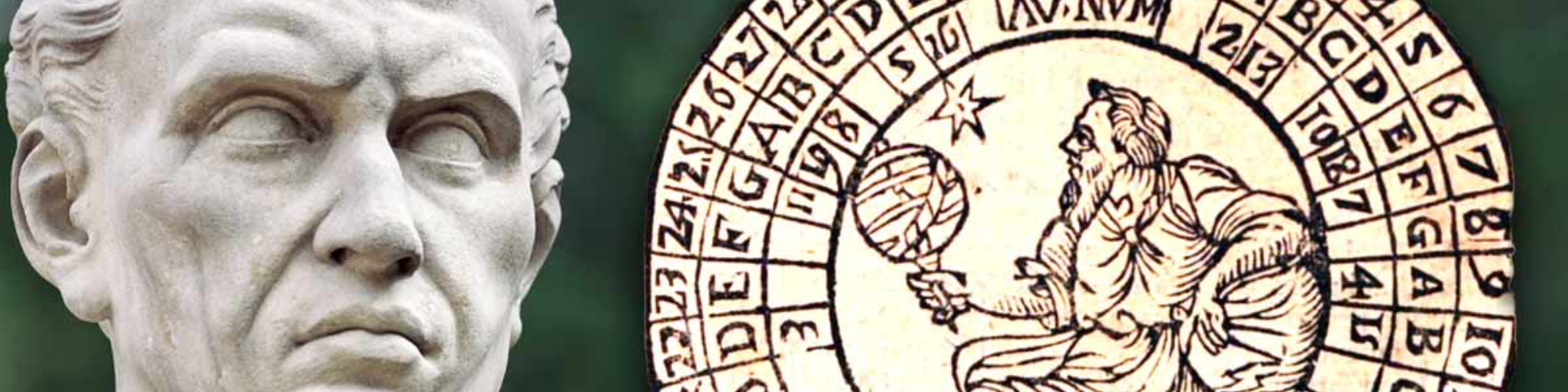
Named for Janus, the two-faced Roman god of gates, beginnings, and transitions. One face looking back, one looking forward. He was the god you prayed to before starting any new undertaking. Every new year, Rome invoked him first. We start our year today under his name still.
February
From februum, a Roman purification ritual. February was the month Rome spent cleansing itself before the new year. Animal sacrifices. Ritual washings. A month dedicated to getting spiritually clean before March, which was when the real year began. Purification is not a pagan concept. But this version of it wasn’t pointed toward God.
March
Named for Mars, the Roman god of war. This was the original first month. Armies moved when the ground thawed and the campaigns opened. The year started with blood and conquest under the name of a war god. We’ve inherited a calendar that treated war as the beginning of everything.
April
Likely from the Latin aperire, to open. The earth opens in spring. Some scholars connect it to Aphrodite, the Greek goddess of love and desire. The Romans translated her as Venus, and April may carry her influence.
May
Named for Maia, Roman goddess of growth and fertility. She was a daughter of Atlas, one of the Pleiades, and the mother of Mercury. Romans made offerings to her throughout this month to ensure the crops would grow. Every spring planting season has been tagged with her name for over two thousand years.
June
Named for Juno, queen of the Roman gods and goddess of marriage. She was Jupiter’s wife and the protector of the Roman state. Romans honored her in this month specifically for her role over marriage and women. June is still the most popular wedding month in the western world.
July
This one had a different name first. It was Quintilis, the fifth month, back when March led the year. After Julius Caesar was assassinated in 44 BC, the Roman Senate renamed it in his honor.
August
Same story. Originally Sextilis, the sixth month. Renamed for Caesar Augustus. He wasn’t satisfied with the honor alone. He lobbied to steal a day from February so August would have 31 days, the same as July. He refused to have a shorter month than his predecessor. Pride carved itself into time itself and we still carry it forward.
September, October, November, December
These four didn’t even get gods or emperors. They got numbers. Septem, octo, novem, decem. Seven, eight, nine, ten.
Except they’re the 9th, 10th, 11th, and 12th months. Every single name is two off because January and February were inserted at the front of the year around 713 BC and the numbers were never corrected.
We have been living inside someone else’s calendar error for nearly three thousand years.
Here is what I want you to sit with.
You didn’t choose any of this. None of us did. We inherited a system built by men who worshipped the creation rather than the Creator, and it is so deeply embedded in daily life that it became invisible. That is exactly how the enemy prefers to work. Not loudly. Quietly. In the background. In the ordinary. In the unexamined.
Romans 12:2 says do not be conformed to this world, but be transformed by the renewing of your mind. Transformation requires awareness. You cannot reject what you cannot see.
In the Torah and the early Hebrew scriptures, months are referenced almost entirely by number. “The first month.” “The seventh month.” You see it throughout Exodus, Leviticus, Numbers. God’s people didn’t name their months after gods because they served the God who made time itself. Numbers were enough.
The named months we associate with the Hebrew calendar today (Nisan, Tammuz, Elul, Tishrei and the rest) are mostly Babylonian in origin. They came back from exile in Babylon around 539 BC. The names were absorbed from the culture of captivity. Even that is worth sitting with.
For the days of the week, same pattern. Hebrew uses numbers all the way through: Yom Rishon, Yom Sheni, Yom Shlishi. First day, second day, third day. The only exception is the Sabbath, which gets a name because it gets a distinction. Everything else is just counted.
Compare that to our days of the week in English: Sunday (the sun), Monday (the moon), Tuesday (Tyr, Norse god of war), Wednesday (Woden), Thursday (Thor), Friday (Frigg). Saturday gets Saturn.
We are not just living inside a pagan calendar. We are using pagan names every time we say what day it is.
Here is what I ask you to do with this.
Don’t panic. Don’t perform some kind of rebellion against the calendar. But the next time you write a date, say a day of the week, or plan your month, take one second to remember that none of these names were built with God in mind. They were built to honor what men worshipped instead of him.
God’s own people used numbers. They counted time without borrowing names from other gods. That discipline was intentional. It was a guard against slow, invisible assimilation into the culture around them. We know how that went when they let it slip.
You live in the world. You use the calendar the world gave you. That is fine. But stay awake inside it. Keep your mind anchored to what is actually true, and hold everything else loosely.
Makes you think doesn’t it. What else is out there hidden from us?
God bless ya brother! Blane Sheffield
SDG